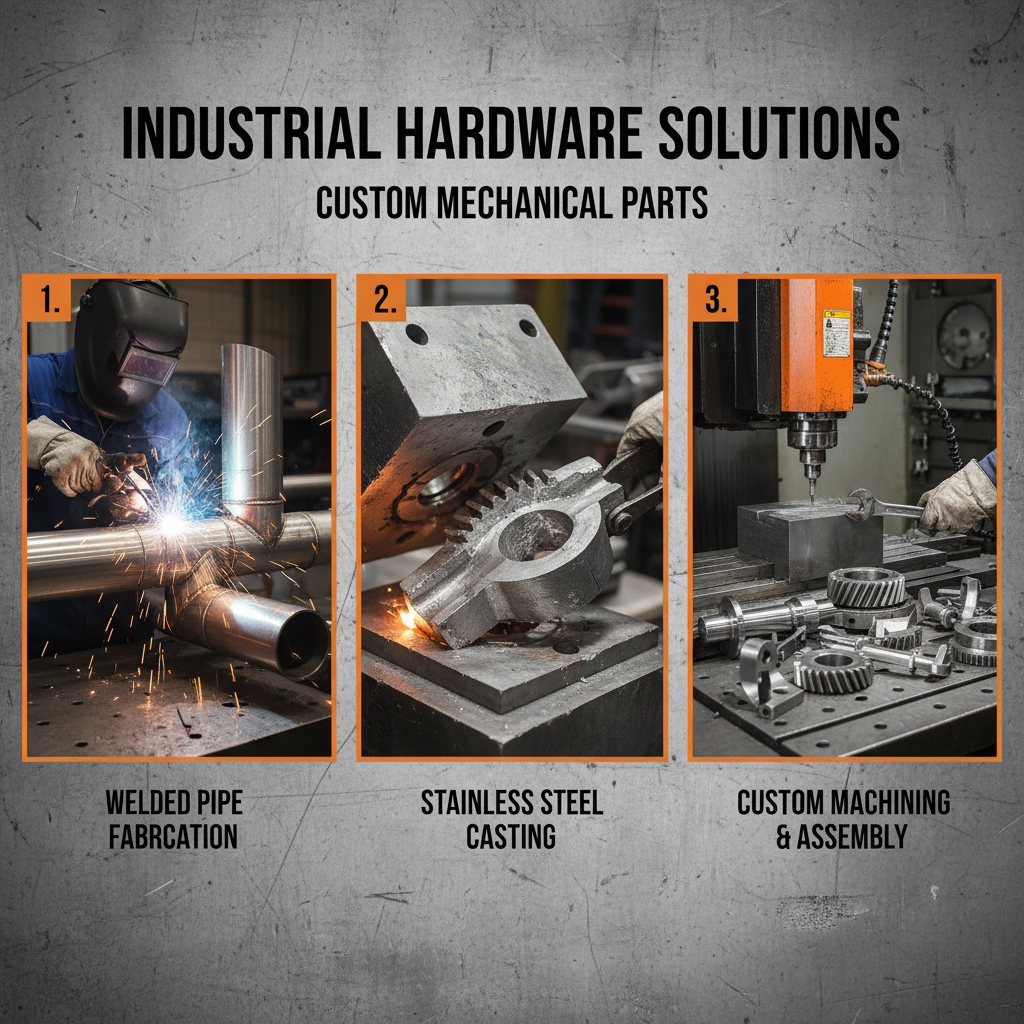
End-to-end mechanical engineering services -- from concept development and advanced simulation through prototyping, manufacturing support, specialized disciplines, and field operations for industrial and mining environments.
Conceptualization & Design
3D CAD Modeling: Creation of detailed parametric 3D models using industry-leading software for components, assemblies, and full plant layouts with accurate geometric representation and design intent.
2D Drafting: Production of precision 2D fabrication and construction drawings conforming to international drafting standards with complete dimensional control and tolerancing annotations.
Concept Development: Collaborative ideation and feasibility studies to evaluate design alternatives, establish performance targets, and define preliminary architectures for new mechanical systems and equipment.
Design for Manufacture (DFM): Optimizing component geometry, material selection, and assembly sequences to minimize production costs, reduce machining complexity, and ensure manufacturability at scale.
Design for Assembly (DFA): Streamlining product architecture to minimize part count, simplify assembly operations, reduce fastener types, and improve overall build efficiency and serviceability.
Analysis, Simulation & Validation
Finite Element Analysis (FEA): Linear and non-linear stress analysis of structural components and pressure-containing equipment to verify strength, stiffness, and stability under static, dynamic, and thermal loading conditions.
Computational Fluid Dynamics (CFD): Numerical simulation of fluid flow, heat transfer, and pressure distribution through complex geometries to optimize ductwork, piping networks, and process equipment performance.
Thermal Analysis: Steady-state and transient thermal simulations to predict temperature distributions, heat flux paths, and thermal stresses in mechanical systems operating under extreme or cyclic temperature conditions.
Vibration Analysis: Modal, harmonic, and random vibration analysis to identify natural frequencies, resonance risks, and dynamic response characteristics of rotating equipment and structural systems.
Fatigue Analysis: Assessment of component life under cyclic loading using stress-life and strain-life methods to predict crack initiation, propagation, and safe operational fatigue life.
Technical Documentation
GD&T Application: Application of Geometric Dimensioning and Tolerancing standards to engineering drawings to communicate precise form, orientation, location, and runout requirements for manufacturing and inspection.
Bill of Materials (BOM): Development of comprehensive multi-level bills of materials with accurate part numbers, descriptions, quantities, material specifications, and procurement classifications.
P&IDs: Creation and revision of Piping and Instrumentation Diagrams depicting process flows, equipment connections, control logic, and instrumentation for plant design and operation reference.
Technical Writing: Preparation of clear, structured technical documentation including manuals, operating procedures, maintenance guides, and engineering reports for stakeholder communication and regulatory compliance.
Prototyping & Testing
Rapid Prototyping: Fast-turnaround fabrication of physical prototypes using 3D printing, CNC machining, and laser cutting to validate form, fit, and function before committing to production tooling.
Strain Gauging: Installation of precision strain gauge rosettes and data acquisition systems to measure real-world stress distributions on equipment and structures under operational loading conditions.
Material Testing: Tensile, hardness, impact, and metallurgical testing of materials and welds to verify mechanical properties and confirm compliance with material specifications and code requirements.
Environmental Testing: Subjecting prototypes and production components to accelerated environmental conditions including temperature cycling, humidity, corrosion, and vibration to validate durability and reliability.
Manufacturing Engineering
Process Planning: Development of detailed manufacturing process plans defining operations, sequences, tooling, machine selection, cycle times, and quality checkpoints for efficient production execution.
Tooling Design: Engineering of jigs, fixtures, dies, molds, and gauges required for accurate, repeatable manufacture and assembly of components with tight tolerances and complex geometries.
Factory Layout: Optimal arrangement of production equipment, material flow paths, workstation zones, and support areas to maximize throughput, minimize handling, and ensure safe operator access.
Quality Control: Implementation of inspection plans, statistical process control, and quality assurance protocols throughout the manufacturing process to ensure conformance to design specifications and customer requirements.
Specialized Disciplines
HVAC/R: Design, sizing, installation, and optimization of heating, ventilation, air conditioning, and refrigeration systems for industrial facilities, mine camps, and process plants requiring precision climate control.
Rotating Equipment: Engineering support for pumps, compressors, turbines, fans, and gearboxes including selection, alignment, vibration analysis, performance testing, and reliability improvement programs.
Pressure Vessel Design: Design and verification of pressure vessels, heat exchangers, and pressure-containing components in accordance with ASME, PED, and other applicable codes and standards.
Mechatronics: Integration of mechanical systems with electronic controls, sensors, and software to create intelligent automated solutions for process control, robotics, and precision positioning applications.
Materials Engineering: Expert selection and specification of metallic and non-metallic materials based on mechanical properties, corrosion resistance, weldability, and cost-effectiveness for demanding service environments.
Operations & Field Services
Root Cause Failure Analysis (RCFA): Systematic investigation of mechanical failures using metallurgical examination, operational data analysis, and fault tree methodology to identify true root causes and prevent recurrence.
Forensic Engineering: Independent failure investigation and expert engineering assessment for insurance claims, litigation support, dispute resolution, and regulatory incident reporting.
Reliability, Availability & Maintainability (RAM): Modeling and analysis of system reliability using FMEA, FTA, Weibull analysis, and Monte Carlo simulation to optimize maintenance strategies and asset performance.
Predictive Maintenance: Implementation of condition-based monitoring programs using vibration analysis, thermography, oil analysis, and ultrasonic inspection to detect developing faults before unplanned shutdowns occur.
Retrofitting & Upgrades: Engineering and execution of equipment modernization projects to extend asset life, improve efficiency, enhance safety, and meet evolving regulatory and performance requirements.
Need Mechanical Engineering Expertise?
From concept design and simulation through prototyping, manufacturing, and field services -- our mechanical engineering team is ready to deliver solutions for your operation.